Tropes
Progression Fantasy vs LitRPG: What's the Difference?
Progression fantasy vs LitRPG explained: definitions, Royal Road tags on 15 series, Audible tags on 14 first books, and where Cradle and DCC fit, Oct 2026.
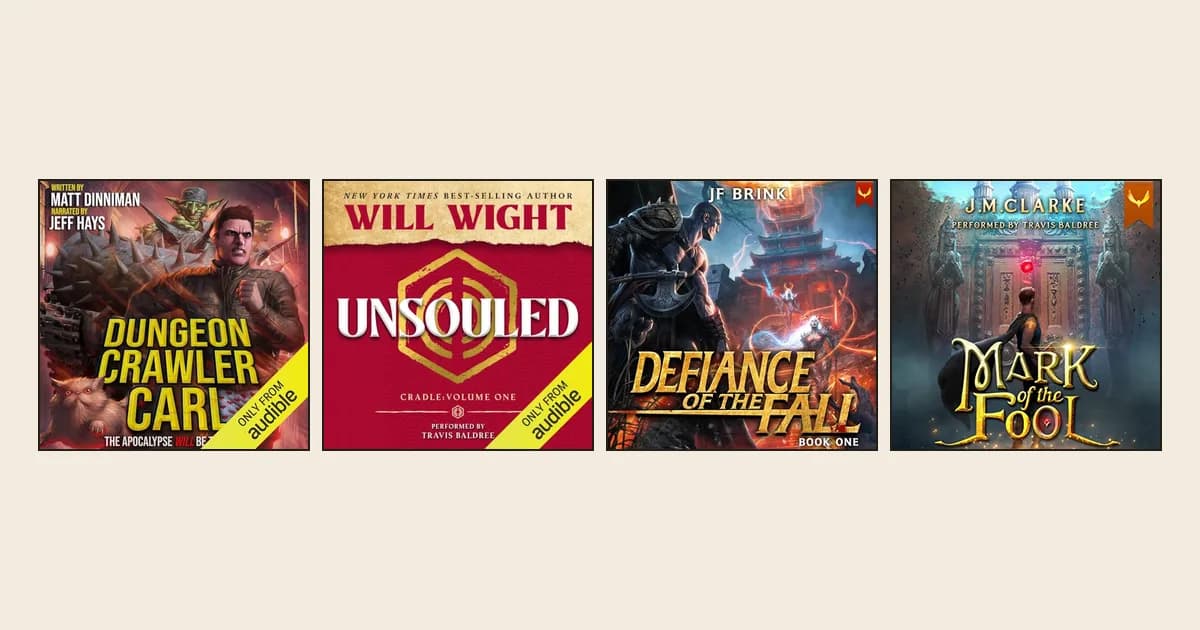
Progression fantasy vs LitRPG comes down to one question: are the game mechanics on the page? LitRPG shows them, with levels, stats and system messages the reader can see. Progression fantasy only needs a hero who grows in power through the world's own rules, game or not. Below are the definitions, the tags Royal Road puts on 15 popular series and Audible on 14 first books (checked October 11, 2026), and where the series readers argue about actually land.
TL;DR: LitRPG = visible game mechanics (stats, levels, a System). Progression fantasy = steady growth in power, with or without a game layer. Half of the LitRPG-tagged series we checked also carry the Progression tag; plenty of progression fantasy has no stats at all. Cradle, Mark of the Fool and Beware of Chicken are the usual examples of progression fantasy that is not LitRPG; Dungeon Crawler Carl and The Primal Hunter are LitRPG; He Who Fights With Monsters and The Path of Ascension carry both tags on Royal Road.
Key Takeaways
- LitRPG is about the game layer: the reader sees the numbers. Wikipedia calls visible RPG statistics "a significant part of the reading experience."
- Progression fantasy is about growth: characters "level up" through the world's magic system, and the world "need not have direct ties to games."
- The labels overlap: 5 of 15 series we checked on Royal Road carry both tags; only 2 have Progression without LitRPG.
- Audible tags sparingly: of 14 book-1 pages, 4 carry a LitRPG tag, 2 a Progression Fantasy tag, and only Defiance of the Fall has both.
- Readers draw the line at stats: the comments that call a series "not really LitRPG" point to missing levels or stat sheets.
Overview: two labels, one shelf
Both terms come from the same online scene, and they get shelved together. Royal Road, where many of these series start, has separate tags for LitRPG, Progression, GameLit and Cultivation; Audible has editorial tags for "LitRPG" and "Progression Fantasy"; the publisher Aethon Books advertises "Brand New LitRPG and Progression Fantasy Series" in one line on its home page. Reddit even has two communities, r/litrpg and r/ProgressionFantasy, and the same series turn up in both. In the 4,433 Reddit comments we save from recommendation threads, 448 mention LitRPG and 67 say "progression fantasy" (most of those threads are from r/litrpg, so read that as a skew of our sample, not of the genre).
So the question is less "which shelf" than "what will I get on the page". That is where the two differ.
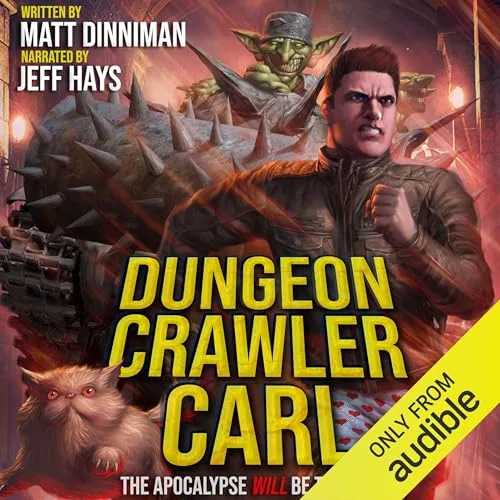 Cover: Audible product page
What LitRPG Means
LitRPG is short for "literary role-playing game". The Wikipedia article defines it as "a literary genre combining the conventions of computer RPGs with science-fiction and fantasy novels", and adds the part that matters for readers: "In LitRPG, game-like elements form an essential part of the story, and visible RPG statistics (for example strength, intelligence, damage) are a significant part of the reading experience." The hero usually knows it: "Typically, the main character in a LitRPG novel is consciously interacting with the game or game-like world and attempting to progress within it."
Authors in the genre put it the same way. Nicoli Gonnella, who wrote the 12-book Unbound, answers "What is LitRPG?" on his site: "Essentially it's any story that incorporates game imagery, stats, levels, or things of that nature into a literary framework." His Kindle title for book 1 says it outright: Dissonance: A LitRPG Adventure (Unbound Book 1).
The word itself is recent. Wikipedia, citing the translator Magic Dome Books, says "the term LitRPG was coined in late 2013" in a brainstorming session between writer Vasily Mahanenko and editors at the Russian publisher EKSMO.
GameLit is the wider net. According to the same article, some writers insisted that in-game progression is part of the definition of LitRPG, "leading to the emergence of the term GameLit to embrace stories set in a game universe but which do not necessarily embody leveling and skill raising."
What Progression Fantasy Means
Progression fantasy has no Wikipedia article of its own: the title redirects to LitRPG, and the definition sits in that article's related-genres section. "In progression fantasy stories, characters 'level up' through the world's magic system as they undergo a hero's journey. Unlike LitRPGs, their world need not have direct ties to games." The same section notes that LitRPG "has also been described both as a sub-genre of progression fantasy and as its cousin."
In practice that covers a lot: magic schools, martial cultivation, monster-hunting ranks, anything where the story keeps measuring how strong the hero is now against how strong he was. The measuring is in the world, not on a character sheet.
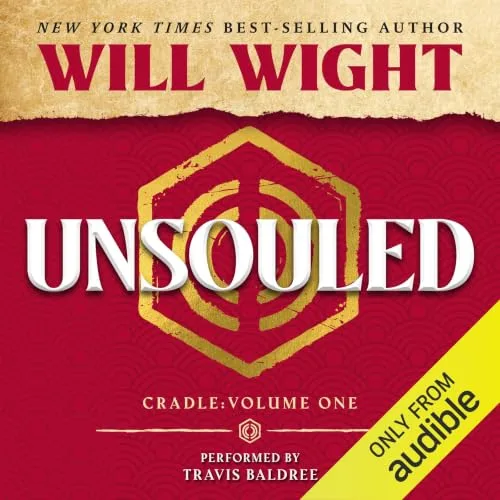 Cover: Audible product page (Audible Studios)
Side by Side
| LitRPG | Progression fantasy | |
|---|---|---|
| Core promise | Game mechanics on the page | Steady growth in power |
| Stats, levels, system messages | Central ("visible RPG statistics") | Optional |
| Tie to games | The world works like a game, and the hero knows it | "need not have direct ties to games" |
| Typical series (per tags below) | Dungeon Crawler Carl, The Primal Hunter, Azarinth Healer, Unbound | Cradle, Mark of the Fool, Sky Pride |
| Both at once | He Who Fights With Monsters, The Path of Ascension, Heretical Fishing, Mage Tank |
How the Labels Are Used: 15 Series on Royal Road
Definitions are one thing; tags show how authors file their own books. We opened the Royal Road pages of 15 series our readers ask about and noted which of four tags each carries (October 11, 2026):
| Series | LitRPG | Progression | Cultivation | GameLit |
|---|---|---|---|---|
| Azarinth Healer | yes | |||
| Chrysalis | yes | |||
| Defiance of the Fall | yes | yes | ||
| He Who Fights With Monsters | yes | yes | ||
| Unbound | yes | |||
| System Change (System Universe) | yes | yes | ||
| The Primal Hunter | yes | yes | yes | |
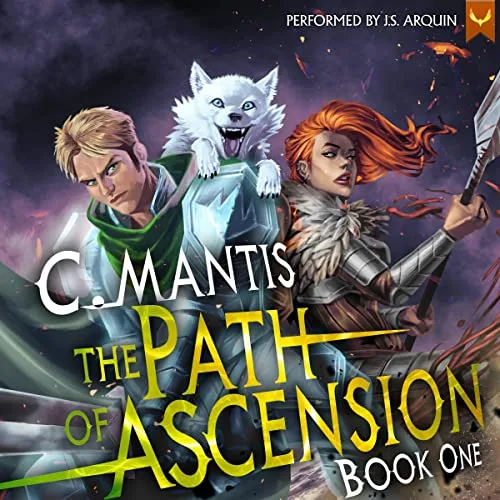
| The Path of Ascension | yes | yes | yes | |
| Heretical Fishing | yes | yes | yes | |
| Mage Tank | yes | yes | ||
| Mark of the Fool | yes | yes | ||
| Sky Pride | yes | yes | ||
| Beware of Chicken | yes | |||
| Mother of Learning | ||||
| The Perfect Run |
Ten carry the LitRPG tag, seven the Progression tag, and five carry both. Only Mark of the Fool and Sky Pride are tagged Progression without LitRPG. Three carry neither: Mother of Learning and The Perfect Run are tagged Time Loop, and Beware of Chicken is tagged Cultivation.
Audible is stingier. On the 14 book-1 product pages we checked, only four carry a "LitRPG" tag (Dungeon Crawler Carl, The Primal Hunter, Defiance of the Fall and Mage Tank) and two a "Progression Fantasy" tag (Unsouled and Defiance of the Fall). Defiance of the Fall is the only one with both. Mark of the Fool, Heretical Fishing, Azarinth Healer and The Wandering Inn get neither, just broad tags like Epic Fantasy and Feel-Good.
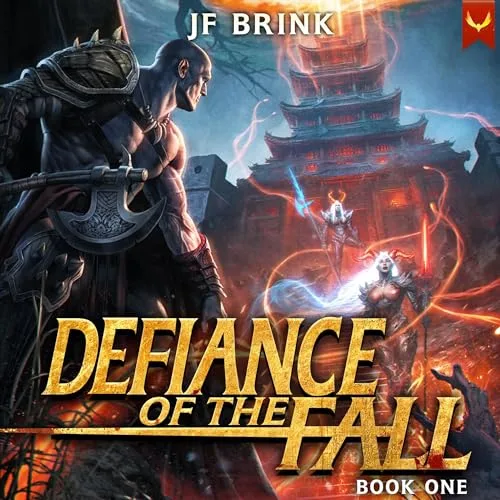 Cover: Audible product page (Aethon Audio)
Where the Famous Series Land
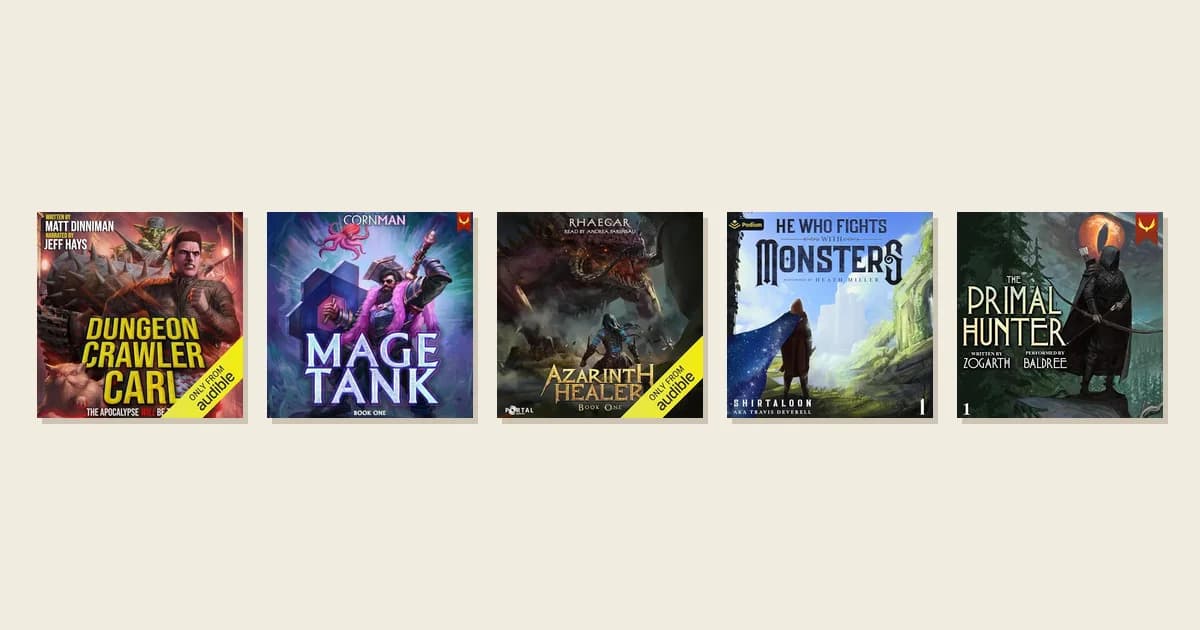
LitRPG, stats and all: Dungeon Crawler Carl (Audible tag LitRPG), The Primal Hunter (both platforms say LitRPG; its Audible blurb promises "levels, classes, professions, skills, dungeons, loot"), Azarinth Healer, Unbound and Mage Tank (whose Audible blurb calls it "A hilarious new Isekai LitRPG adventure").
Both labels: He Who Fights With Monsters, The Path of Ascension, Heretical Fishing and Mage Tank are tagged LitRPG and Progression on Royal Road, and Defiance of the Fall is tagged both on Audible. Heretical Fishing is a good example of how loose the game layer can be: its hero is "granted powers by a broken System", but the books are sold as "A Cozy Guide".
Progression fantasy without the game layer: Cradle (Audible tag Progression Fantasy, no LitRPG; see books like Cradle), Mark of the Fool (Royal Road: Progression and GameLit, no LitRPG; see our Mark of the Fool reading order) and Sky Pride. Cultivation stories such as Beware of Chicken sit here too.
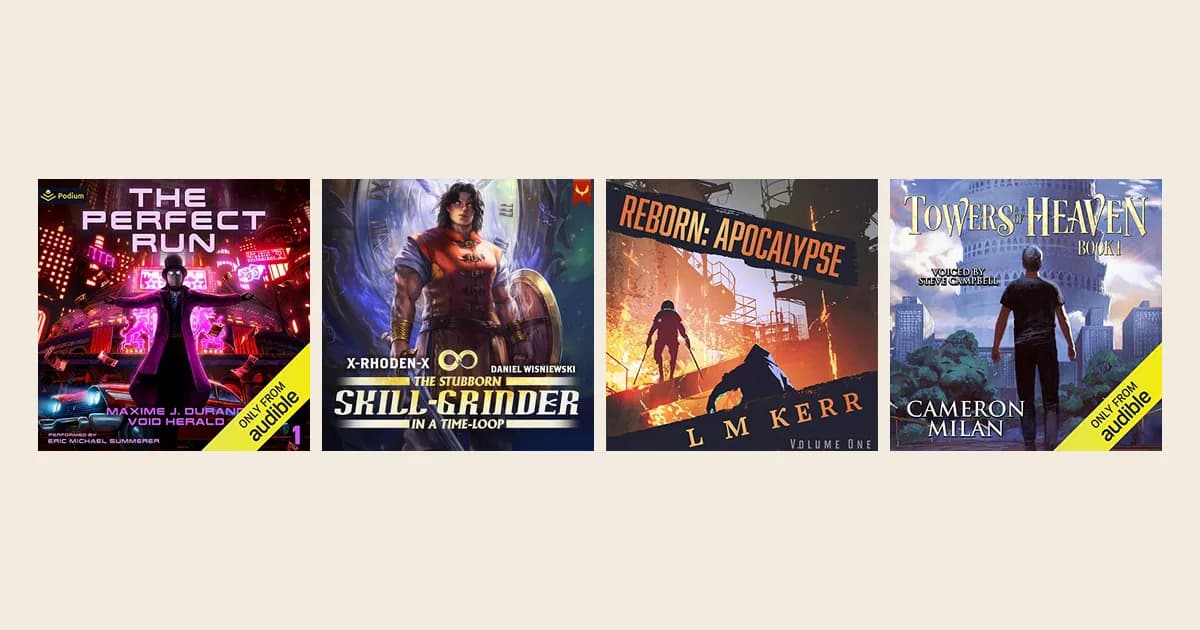
Neither label: Mother of Learning and The Perfect Run are time-loop stories with no LitRPG tag; they are the two most-named series in the tally behind our time loop LitRPG books list.
 Cover: Audible product page (Aethon Audio)
Analysis: where readers draw the line
When readers say a series is "not really LitRPG", they almost always mean the numbers are missing. In the comments we save, that label lands on Cradle, Mark of the Fool, Beware of Chicken, The Perfect Run, Mother of Learning and The Path of Ascension.
On Mark of the Fool, u/Aerophite explained the distinction in one sentence: "It's also not technically a litRPG but is instead a 'progression fantasy'...which is basically to say that it's in a magical fantasy world where the characters progress up from weak to powerful, but there aren't 'levels' per-say." (comment, October 11, 2024). u/Elaphe21 filed Cradle the same way: "Cradle (long series, progression fantasy, no litRPG)" (comment, March 29, 2023).
The line is not sharp. The Path of Ascension is tagged LitRPG on Royal Road, yet u/Govir wrote that it "isn't really LitRPG, in that it doesn't use stats and such. It does have game like mechanics though." (comment, August 12, 2024). One reader even said of The Perfect Run, "It's not strictly 'LitRPG' but neither is HWFWM." (comment, January 15, 2022), although He Who Fights With Monsters carries the LitRPG tag on Royal Road.
The other half of the line is how much of the page the numbers take. u/MattGCorcoran's note on Welcome to the Multiverse is typical: "Welcome to the Multiverse is an apocalypse system LitRPG, but the stat sheets are their own chapters that you can skip." (comment, October 6, 2025). If stat blocks put you off, that is the thing to check before you buy, more than the label.
Our take
Based on the definitions and tags above, treat LitRPG as a promise about the page and progression fantasy as a promise about the plot. If you want to watch numbers climb, look for the LitRPG tag, a "System" in the blurb or "A LitRPG Adventure" in the title. If you want the climb without the spreadsheets, Cradle, Mark of the Fool and cultivation stories like Beware of Chicken are the safe picks. And if a series carries both tags, read a sample chapter: "both" can mean anything from Heretical Fishing's light System to The Primal Hunter's full stat sheets.
How we checked this
On October 11, 2026 we read the Wikipedia LitRPG article (raw text) and checked that "Progression fantasy" redirects to it; opened Aethon Books' home page; opened the Royal Road fiction pages of the 15 series in the table and recorded their tags; read the Audible tags on 14 book-1 product pages; and read Nicoli Gonnella's FAQ, Haylock Jobson's book page and the Unbound Kindle page. Reader comments and counts come from Reddit thread data saved on October 10, 2026 (43 threads, 4,433 comments). A site-agent then compared every claim in this article with our source table before publication.
Related Reading
- System apocalypse books: LitRPG where the System arrives on Earth.
- Cozy LitRPG books: lower-stakes picks from both sides of the line.
- What is LitRPG: the definition, ten terms and seven LitRPG series to start with, sorted by length.
- All trope guides
Frequently Asked Questions
What is the difference between progression fantasy and LitRPG? LitRPG shows game mechanics on the page; progression fantasy only needs growing power, with or without a game.
Is LitRPG a type of progression fantasy? Often; Wikipedia calls it both a sub-genre and a cousin.
Is Cradle a LitRPG? Not usually; Audible tags it Progression Fantasy.
What is GameLit? A wider label for stories set in a game universe, with or without leveling.
Where does the word LitRPG come from? Russia, late 2013, per Wikipedia.
Are cultivation novels progression fantasy? Usually; some, like Defiance of the Fall, also carry the LitRPG tag.
References
- Wikipedia: LitRPG
- Royal Road: He Who Fights With Monsters
- Royal Road: Mark of the Fool
- Royal Road: The Path of Ascension
- Royal Road: Sky Pride
- Audible: Unsouled (Cradle 1)
- Audible: Defiance of the Fall
- Audible: Dungeon Crawler Carl
- Aethon Books
- Nicoli Gonnella: FAQ
- Amazon: Dissonance (Unbound 1, Kindle)
- Haylock Jobson: Books
- Royal Road: Heretical Fishing
- Audible: The Primal Hunter
- Audible: Mark of the Fool
About the author

The LevelUpShelf desk
The LevelUpShelf desk reads the store pages and the reader threads so you can pick book 1 with the numbers in front of you. Every count is dated and linked.
Keep reading
What Is LitRPG? Meaning, Key Terms and 7 Places to Start
Tropes · 14 min
System Apocalypse Books: 8 Series Where Earth Gets a System
Tropes · 10 min
Time Loop LitRPG Books: 7 Series With a Second Chance
Tropes · 10 min
Dungeon Core Books: 7 Series Readers Recommend, Ranked
Tropes · 9 min
Cozy LitRPG Books: 10 Low-Stakes Series Readers Recommend
Tropes · 10 min
LitRPG Reading Orders: 12 Series, Every Book in Order
Reading Order · 14 min
Books Like He Who Fights with Monsters: 12 Reader Picks
Books Like · 14 min
Best LitRPG Audiobooks: 12 Series Listeners Name Most
Audiobooks · 18 min
About this article
LevelUpShelf is independent: no ads, no sponsored posts, and nobody pays to be on a list. Some store links are affiliate links: we may earn a commission if you buy through one, and it never decides what we list (affiliate links). Book counts, release dates, audiobook lengths and ratings are snapshots from the date we checked them; publishers and stores change listings, so check the store page before you buy. Recommendations come from cited reader discussions, not from reading we claim to have done. Articles are researched and written with AI tools, and every fact is checked against its source before publishing. See how the desk works and how we use AI.